 Metadata catalogue
Sea regions
Type of resources
Available actions
Topics
INSPIRE themes
Keywords
Contact for the resource
Provided by
Years
Formats
Representation types
Update frequencies
status
Service types
Scale
Resolution
-
-
The approach to the affection of the submarine noise in the North Atlantic Marine Subdivision has been made for a 5' x 5' grid, being the noise source navigation. To do this, a semi-quantitative index has been developed that integrates the analysis of AIS data (merchant vessels) and VMS data (fishing ships). For both, cells have been selected according to the intensity of traffic effects based on the density of AIS and VMS signals in a month. In both cases, different intensity intervals have been established, and each case has been given a different weight. In addition, adjacent cells have been selected (classified into four ranges), giving them another way of importance depending on the proximity. The zero range coincides with the cells in which the signal density was recorded, while the first range corresponds to those cells limiting with the zero level, and so on. In Table 10 and Table 11 of the aforementioned document the applied values are indicated. The final result is the addition of all the weights in each cell, taking into account the maximum value for the bordering cells. The values range between 0 and 3.1, with the following levels of classification: Very High: > 2 / High: 1.71 - 2 / Medium: 0.41 - 1.7 / Low: 0.1 - 0, 4 / Very Low < 0.1
-
Se han seleccionado zonas de potencial alto de entrada de patógenos a partir de las celdas clasificadas por el rango “Muy Alto” y zonas de potencial moderado de entrada de patógenos a partir de las celdas clasificadas por el rango “Alto” en el Mallado de Patógenos de la Demarcación marina del Estrecho y Alborán.
-
These grid data were derived from National Parks and Wildlife Service cetacean surveys within the Irish MSFD area and the EEA-10km GRID. The grid shows the current distribution of Harbour seal (Phoca vitulina) and Grey seal (Halichoreus grypus) in Irish coastal and marine waters. The data were collected for the purposes of 2019 reporting under Article 17 of the EU Habitats Directive.
-
Undeveloped Coast within North Ayrshire as set out in the Local Development Plan
-
These grid data were derived from National Parks and Wildlife Service cetacean surveys within the Irish MSFD area and the EEA-10km GRID. The grid shows the current distribution of Harbour seal (Phoca vitulina) in Irish coastal and marine waters. The data were collected for the purposes of 2019 reporting under Article 17 of the EU Habitats Directive.
-
Isolated Coast within North Ayrshire as set out in the Local Development Plan
-
Developed Coast within North Ayrshire as set out in the Local Development Plan
-

The Geographical Sub-Areas (GSAs) were established under the RES-GFCM/33/2009/2 - Establishment of Geographical Sub-Areas in the GFCM area amending the resolution GFCM/31/2007/2. The dataset only shows the GSA15 which is the GSA in which the Maltese Islands are found. For all the GSAs, one must refer to the legislation mentioned above or the following website: http://www.fao.org/gfcm/data/map-geographical-subareas/en/
-
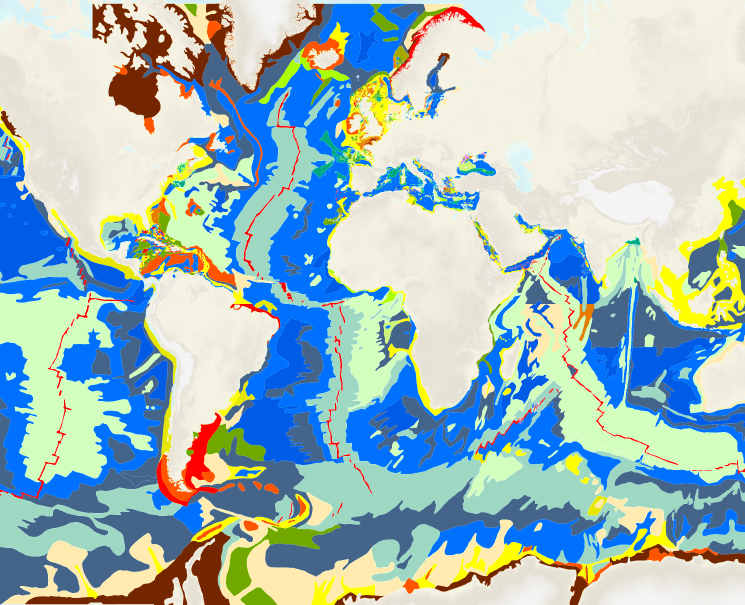
The “World Seabed Sediment Map” product contains geo-referenced digital data, describing the nature of the sediment encountered in different seas and oceans of the world. The objects are all surface areas and the description of an object includes in particular the nature of the sediment including rock-type bottoms.